
The Vietnamese government has recently announced a temporary suspension of sending workers to several Middle Eastern countries due to rising geopolitical tensions in the region. This decision reflects Vietnam’s commitment to prioritizing the safety and well-being of its overseas workforce while closely monitoring developments in the international labor market.
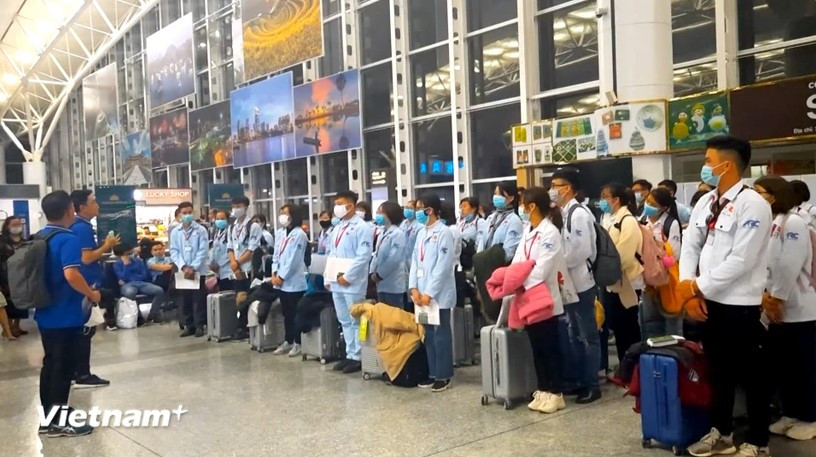
Government Directive to Protect Overseas Workers
On March 1, the Department of Overseas Labor Management under the Ministry of Home Affairs issued an official directive requiring licensed manpower agencies to temporarily halt the deployment of Vietnamese workers to Middle Eastern markets. The suspension will remain in effect until the security situation in the region stabilizes.
The move follows escalating military tensions triggered by coordinated airstrikes conducted by the United States and Israel on Iranian territory and subsequent retaliatory actions by Iran across various locations in the Middle East. These developments have raised concerns about potential instability in several countries that host a large number of foreign workers, including Vietnamese nationals.
In response to these developments, Vietnamese authorities have taken precautionary measures to ensure that workers are not exposed to unnecessary risks while working abroad.
Vietnamese Workforce in the Middle East
The Middle East has long been an important destination for Vietnamese migrant workers. According to official statistics, more than 10,000 Vietnamese workers are currently employed in the region.
The distribution of Vietnamese workers across key Middle Eastern markets includes:
-
Saudi Arabia: approximately 6,000 workers
-
United Arab Emirates (UAE): around 4,000 workers
-
Qatar: roughly 500 workers
-
Bahrain: about 100 workers
These workers are primarily employed in sectors such as:
-
Hospitality and restaurant services
-
Domestic work and household services
-
Construction and infrastructure projects
These sectors have historically relied on international labor, making Vietnamese workers an important part of the workforce in several Gulf countries.
Currently, about 34 Vietnamese manpower service companies operate in Middle Eastern labor markets, including 14 companies sending workers to the UAE, 12 to Saudi Arabia, six to Qatar, and two to Bahrain.
Measures to Ensure Worker Safety
Despite the temporary suspension of new deployments, Vietnamese workers already working in the Middle East continue their employment as usual. The Vietnamese government and labor authorities have instructed recruitment agencies to strengthen support and monitoring for these workers.
Key measures include:
-
Maintaining regular communication with employers and partners in host countries
-
Monitoring security developments in the region
-
Ensuring the safety and legal rights of Vietnamese workers
-
Coordinating closely with Vietnamese embassies and labor management offices abroad
Recruitment agencies are also encouraged to provide timely information to workers to prevent panic and ensure that they remain informed about any changes related to the security situation.
Vietnam’s Global Overseas Workforce
Vietnam has become one of Asia’s leading sources of international labor. Currently, more than 600,000 Vietnamese citizens are working in nearly 60 countries and territories worldwide, contributing significantly to both host-country economies and Vietnam’s domestic development.
Remittances from overseas Vietnamese workers generate approximately USD 7 billion annually, playing an important role in supporting families and strengthening Vietnam’s economy.
Outlook for the Middle East Labor Market
The temporary suspension of labor deployment to the Middle East is considered a precautionary measure rather than a long-term restriction. Once the regional security situation improves and stability is restored, Vietnamese manpower agencies are expected to gradually resume recruitment and deployment activities to these markets.
The Middle East remains a strategically important destination for Vietnamese workers due to strong demand in construction, hospitality, energy, and infrastructure sectors. However, global manpower agencies must continue to prioritize risk management, worker protection, and compliance with international labor standards when operating in regions affected by geopolitical uncertainty.
Vietnam Manpower’s Commitment to Safe International Employment
For manpower agencies such as Vietnam Manpower, worker safety and sustainable employment opportunities remain top priorities. In periods of geopolitical uncertainty, responsible manpower providers closely follow government guidance, maintain communication with international partners, and implement proactive measures to safeguard workers’ rights and welfare.
As global labor mobility continues to evolve, Vietnam Manpower remains committed to connecting Vietnamese talent with reputable employers worldwide while ensuring safe, transparent, and sustainable recruitment practices.